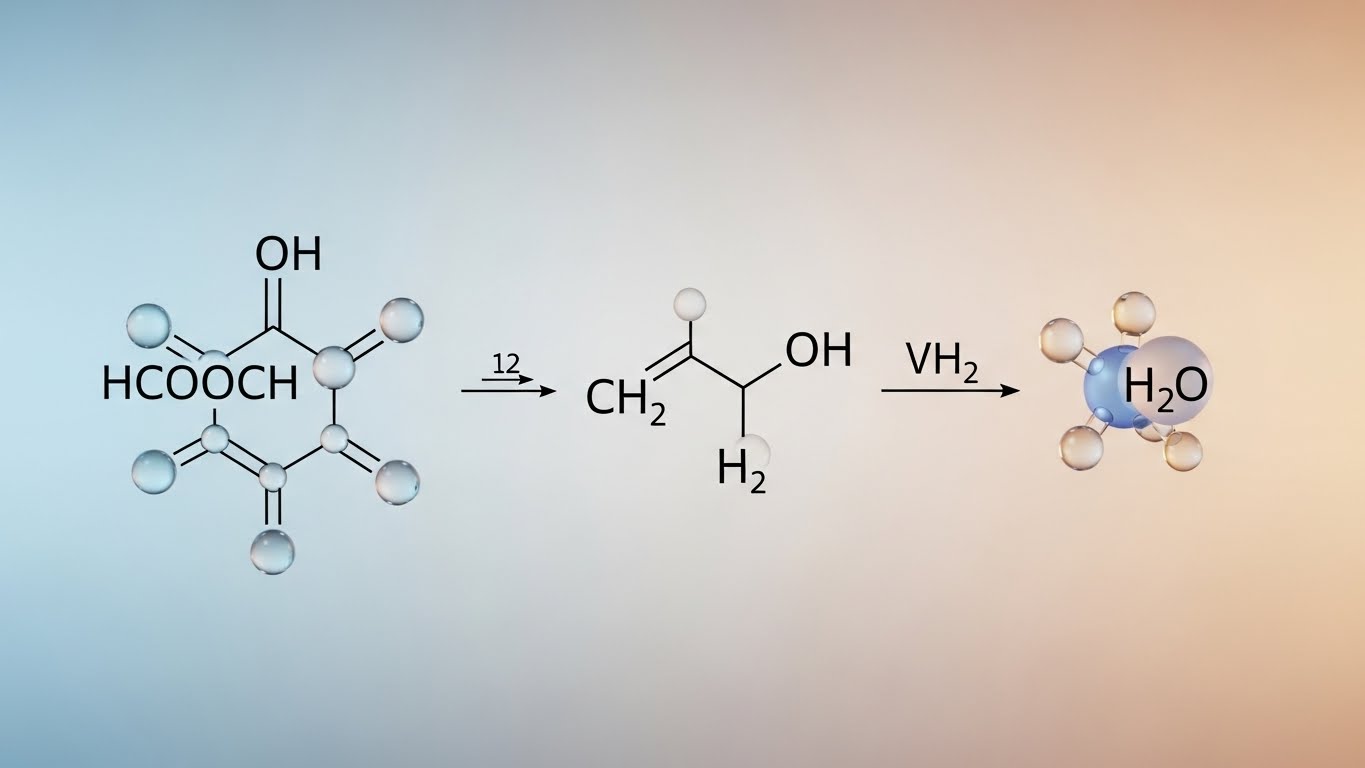
Chemistry often feels like a language built from symbols and reactions, yet every formula tells a story about how substances behave. The expression hcooch ch2 h2o may look cryptic at first glance, but it carries a world of chemical meaning. Many learners search for this combination because they want clarity about how these components interact, what they represent, and how they appear in organic chemistry reactions. Whether you are a student, researcher, or simply curious, gaining a deeper understanding of this combination opens the door to important concepts in organic structure, hydrolysis, and functional group behavior.
When you look closely at hcooch ch2 h2o, the first thing that stands out is how each part relates to organic molecules. These components appear in reaction mechanisms, ester formation, decomposition, and sometimes in hydration pathways. By exploring them piece by piece, their relationship becomes easier to understand. This topic also creates confusion because the letters seem unconventional without spacing, but once interpreted correctly, the chemistry reveals itself clearly. That clarity is what this long-form guide aims to deliver.
Breaking Down HCOOCH CH2 H2O and Its Hidden Structure
Before exploring reactions, you need a solid understanding of each component. Chemistry terms are rarely written as continuous letters without subscripts, yet in many online contexts formulas become compressed, which is what often happens with hcooch ch2 h2o. When rewritten with chemical notation, each part makes sense as a molecular structure or a functional unit. The first portion relates to an ester or formate-type structure. The next signifies a methylene group. The final part identifies water, the universal solvent and a frequent reactant in hydrolysis pathways.
Once you interpret the structure behind the letters, you begin to grasp how this combination appears in reactions. Chemistry is built on relationships. Molecules collide, form bonds, break bonds, and create new substances guided by predictable rules. This formula, once decoded, appears in several fundamental transformations, especially those involving ester breakdown or hydration of an organic fragment. Understanding why these pathways matter builds the foundation for deeper insight into organic reactivity.
You Might Also Like: Aurö
The Ester Component Of HCOOCH CH2 H2O and Its Behavior
The first portion of hcooch reflects an ester-like structure. Esters play major roles across organic synthesis, biochemistry, and industrial chemistry because of their stability and reactivity under certain conditions. They can undergo hydrolysis, transesterification, or decomposition based on the environment. Their behavior changes in acidic, basic, or thermal conditions. The presence of the ester fragment sets the stage for understanding why water becomes relevant later in the formula.
Ester molecules form through a reaction between an acid and an alcohol. Their breakdown, however, relies heavily on water. The presence of h2o in the original formula indicates a connection to hydrolysis or hydration. This helps explain why the combination often appears in discussions about reaction pathways.
Significance of the CH2 Group in Organic Frameworks
The ch2 portion refers to a methylene unit. This fragment appears everywhere in organic chemistry. It is the backbone of countless molecules, yet its behavior changes depending on what surrounds it. A methylene group attached to an ester behaves differently than one in a simple alkane. Understanding this unit helps explain how the entire structure transforms under various conditions.
Methylene groups can serve as sites of reactivity, stability, or flexibility in reactions. Their behavior contributes to rearrangements, shifts in electron density, and the overall outcome of reactions involving water or esters. When exploring deeper interactions between the ester component and water, keeping the methylene group in mind becomes essential.
How Water Shapes the Chemistry of These Components
The last portion, h2o, is not simply a solvent in organic chemistry. It is one of the most influential reactants in countless transformations. Water has the potential to break esters, add across double bonds, promote rearrangements, or shift an equilibrium. Its behavior depends entirely on the reaction environment. When combined with the ester-like and methylene components in hcooch ch2 h2o, water often becomes the agent that creates change.
Water’s polarity makes it powerful. It can stabilize ions, donate protons, accept protons, and drive hydrolysis. Its presence in a formula almost always suggests that a transformation is under way. Understanding how water interacts with organic fragments is a cornerstone of learning organic chemistry.
Water as a Hydrolyzing Agent
Hydrolysis breaks molecules using water, and esters are among the most common targets of this reaction. When an ester meets water under acidic or basic conditions, the molecule splits into its corresponding acid and alcohol. This breakdown lies at the core of why hcooch ch2 h2o appears in explanations of organic mechanisms. It is not merely a combination of letters; it marks the sequence of events that unfolds during hydrolysis.
Water in Hydration Reactions
Water can also add to organic fragments. Although the ch2 group itself is not usually the direct target of hydration, its surrounding structure determines whether the molecule undergoes addition or rearrangement. Hydration reactions transform molecules by increasing the oxygen content, often leading to alcohol formation. In contexts involving esters, hydration may lead to partial or full transformation depending on the conditions.
How Reaction Environments Influence the Outcome
The interaction between an ester-like structure, a methylene fragment, and water does not occur in isolation. Reaction conditions shape the results. Temperature, acidity, solvents, catalysts, and concentration all change what the molecules ultimately become. When exploring the meaning behind hcooch ch2 h2o, you must consider how these conditions transform the pathway.
A reaction that seems simple on paper may behave very differently in practice. Organic chemistry teaches you that conditions are often as important as the molecules involved. For example, hydrolysis under acidic conditions proceeds through protonation steps. In contrast, basic hydrolysis uses nucleophilic attack without protonation. The presence of the ch2 group impacts the reaction’s energy demands. Understanding these nuances helps decode why this formula appears in various explanations.
The Role of Acids in Shaping Reactivity
Acidic environments activate esters. Protonation increases the electrophilicity of the carbonyl carbon, making it more vulnerable to attack. Water, acting as a nucleophile, breaks the bond and forms intermediate structures that eventually yield the acid and alcohol. The ch2 group stabilizes the transition states by altering electron distribution. Each step reflects a predictable sequence that fits neatly into the broader concept of how esters behave.
In an acidic medium, reaction progress depends heavily on the balance between proton donors and acceptors. Molecules shift charges, rearrange briefly, and then settle into more stable forms. These transformations explain why the formula hcooch ch2 h2o appears when describing hydrolysis and related pathways.
Basic Conditions and Their Influence
Under basic conditions, esters undergo saponification. Hydroxide ions attack the carbonyl carbon directly. This pathway is faster and more irreversible than acidic hydrolysis. The methylene unit influences the strength of electron withdrawal or donation, shaping the reaction’s speed. Once the ester breaks, the products form quickly, and water may appear in later steps during the regeneration of certain species.
Because the reaction is driven by strong nucleophiles, the environment determines how the ester-like component reacts. When learners search for hcooch ch2 h2o, they often want clarity about these pathways. Understanding the influence of basic conditions provides that clarity.
Applications of These Molecular Interactions in Real Life
Chemical reactions are not theoretical puzzles. They shape industries, products, and biological systems. Esters appear in fragrances, polymers, pharmaceuticals, and natural processes inside the body. Methylene groups form the backbone of countless compounds. Water is essential for nearly all biological and chemical transformations.
Understanding how hcooch ch2 h2o behaves gives insight into practical scenarios. Whether it is in food chemistry, materials science, biomolecules, or manufacturing, the same rules apply. The relationships between molecules in this formula mirror the relationships found in larger structures and systems.
Role in Industrial Chemistry
Industries use ester hydrolysis to create acids, alcohols, and specialty chemicals. Adjusting water content changes yields and reaction efficiency. Methylene fragments determine chain length and alter properties such as volatility, solubility, and melting point. A small structural change leads to major differences in product behavior.
Water acts as both a reactant and regulator. Too little water slows the reaction. Too much water shifts equilibrium. Engineers manage these details with precision. The behavior described by the formula hcooch ch2 h2o echoes through these industrial processes.
Use in Organic Synthesis
Chemists rely on esters as intermediates. The methylene groups attached to them influence reactivity. Hydrolysis provides controlled breakdown when moving toward a target molecule. Water becomes a tool rather than a background solvent.
In synthesis, understanding how these pieces interact reduces trial and error. Predictability saves time and improves accuracy. The concepts tied to this formula show the importance of mastering foundational reactions.
Biological and Environmental Relevance
Inside living organisms, ester hydrolysis happens constantly. Enzymes break ester bonds in fats, signaling molecules, and metabolic intermediates. Water is always present, ensuring reactions proceed. The methylene groups in biological molecules shape function and stability.
Outdoors, similar reactions influence how substances degrade in soil, water, and air. Environmental processes rely on hydrolysis and hydration to break down pollutants, plant materials, and organic waste. The chemistry reflected in hcooch ch2 h2o appears everywhere in nature.
Understanding Reaction Mechanisms Step by Step
To make the topic clearer, imagine the hydrolysis of an ester-like component with a methylene fragment nearby. Though simplified, the sequence below reflects a common mechanism that helps explain the interactions represented by the original formula.
Step One: Activation or Direct Attack
In acidic conditions, protonation occurs first. In basic conditions, hydroxide attacks immediately. The presence of the ch2 fragment influences electron density, adjusting how easily the reaction begins. This difference in behavior helps explain why variations of the reaction appear depending on context.
Step Two: Formation of an Intermediate
Intermediates form when water adds to the structure. These appear briefly. Their lifetimes are measured in fractions of seconds, yet understanding them clarifies the overall reaction. The methylene group stabilizes or destabilizes intermediates depending on its position.
Step Three: Collapse Into Stable Products
As the reaction moves toward completion, intermediates break apart. Products form, and water returns to its neutral state or participates in proton transfers. This completes the transformation. The original ester component no longer exists, replaced by new functional groups.
Step Four: Equilibrium and Stability
Unless conditions force the reaction forward, some portion may revert to the original ester. Water, acidity, and the methylene unit all influence equilibrium. Knowing how these factors work together helps you grasp why the formula takes different meanings in various settings.
Why Learners Often Search for This Formula
Students often encounter confusion when formulas lose formatting online. Subscripts vanish. Symbols merge. What begins as a clear structure becomes hcooch ch2 h2o, which looks cryptic. Searches for this combined formula often come from:
– exams that compress formulas
– textbooks that remove subscripts in text form
– assignments involving ester reactions
– questions about hydrolysis
– attempts to decode reaction pathways
This article addresses that confusion by rebuilding the meaning behind the letters. Understanding the structure and reactivity helps you interpret similar compressed formulas in the future.
Building Stronger Chemical Intuition Through This Example
The best way to grow in chemistry is to deepen intuition. When you see a formula, you want to understand not only what it is but what it does. Formulas like hcooch ch2 h2o help sharpen this skill because they involve common building blocks: an ester component, a methylene group, and water. Once you learn how these pieces connect, you see patterns more easily in other reactions.
This is why educators use similar examples to teach reactivity, hydrolysis, hydration, and mechanism design. By working through this formula, you gain insight into larger concepts like electrophilicity, nucleophilicity, polarity, and functional group behavior. These ideas appear throughout organic chemistry and beyond.
You Might Also Like: Ombudsmänner
Bringing It All Together With Realistic Scenarios
Imagine a scenario in a laboratory where a chemist heats an ester in water under acidic conditions. The goal is to break it into its acid and alcohol components. The methylene group affects the boiling point and the rate of hydrolysis. Water surrounds the molecules, providing opportunities for attack and rearrangement. Over time, the ester disappears, replaced by two simpler substances.
This transformation mirrors what the combined formula represents: the interconnected behavior of these fragments through reaction pathways. Understanding this scenario makes the abstract symbols concrete.
Another example appears in environmental chemistry. Rainwater triggers slow hydrolysis of organic esters in soil. Microorganisms contribute enzymes that accelerate the process. The methylene groups in natural compounds influence how fast they break down. The principles remain the same, echoing through different fields.
Final Thoughts On HCOOCH CH2 H2O
Chemistry comes alive when formulas tell a story, and the combination hcooch ch2 h2o reveals a narrative about how ester components, methylene fragments, and water interact. Once decoded, the meaning becomes clear. These molecules participate in important transformations across synthesis, industry, biology, and the environment. Their behavior reflects broader principles that guide organic chemistry as a whole.
Understanding this formula strengthens your intuition and helps you decode similar compressed structures. The more you explore these relationships, the more chemistry becomes a language you can read, interpret, and apply with confidence.